
 Image 1 of 3
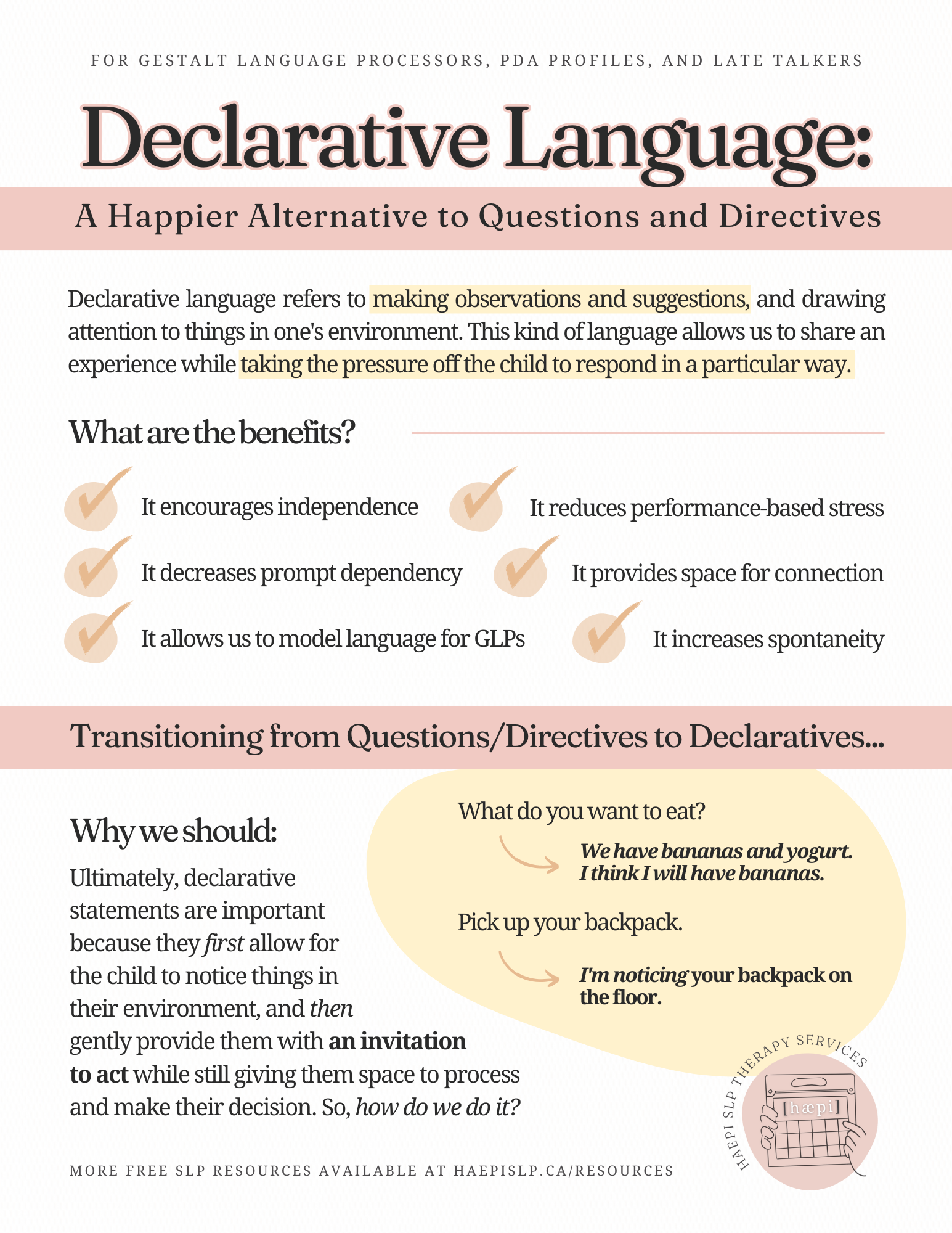 Image 2 of 3
 Image 3 of 3
Declarative Language: A Happier Alternative to Questions and Directives
Especially useful for GLPs and late talkers, declarative language offers a gentler approach to communication by inviting children to act as opposed to pressuring them to respond in a particular or expected way. Whereas questions and directives are a means to an end, declarative statements actually increase independence by giving the child the space they need to notice what's happening in their environment, process what has been said to them, and then respond with their own thoughts and ideas.
In other words, declarative language helps to create space for connection and is a fantastic tool for child-led play.
Declarative Language: A Happier Alternative to Questions and Directives
Especially useful for GLPs and late talkers, declarative language offers a gentler approach to communication by inviting children to act as opposed to pressuring them to respond in a particular or expected way. Whereas questions and directives are a means to an end, declarative statements actually increase independence by giving the child the space they need to notice what's happening in their environment, process what has been said to them, and then respond with their own thoughts and ideas.
In other words, declarative language helps to create space for connection and is a fantastic tool for child-led play.